What is the role of a development facilitator?
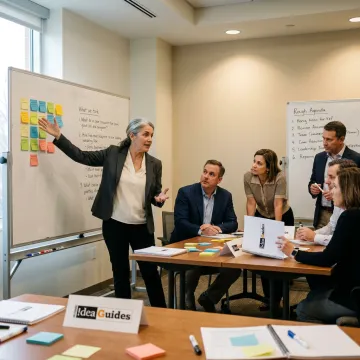
A development facilitator designs and guides learning experiences that help leaders and teams improve how they collaborate, decide, communicate, and act. Rather than lecturing, the facilitator creates structured conversations, exercises, and decision processes so participants generate insight together. At IdeaGuides, this often includes leadership retreats, team alignment, meeting skills, strategic planning, and follow-through planning.
What does a leadership development facilitator do?
A leadership development facilitator helps leaders practice the behaviors required for productive collaboration, including listening, decision-making, conflict management, strategic thinking, and meeting leadership. The facilitator structures activities, discussions, and reflection so participants learn by doing. Sessions may include executive retreats, team development workshops, problem-solving labs, or meeting effectiveness training tailored to your organization's priorities.
What are the 7 roles of a facilitator?
The seven common facilitator roles are process guide, neutral convener, timekeeper, engagement builder, question asker, conflict navigator, and outcome documenter. In leadership development, these roles help groups stay focused, include all voices, manage difficult dynamics, think creatively, make decisions, and leave with clear next steps. A skilled facilitator adjusts these roles based on the group's purpose and energy.
Who should attend a leadership development session?
Leadership teams, executive groups, department heads, cross-functional project teams, and emerging leaders can all benefit. IdeaGuides also works with non-profits, government agencies, educational institutions, technology companies, manufacturers, healthcare organizations, and professional services firms. The best participants are people who influence decisions, culture, team performance, or the success of an important initiative.
Can leadership development facilitation be done remotely?
Yes. IdeaGuides offers sessions on-site, off-site, and remotely depending on the program. Virtual facilitation can support leadership alignment, ideation, problem-solving, and team development when participants are distributed. The facilitator adapts tools, agendas, participation methods, and follow-up documentation so remote groups remain engaged and the session still produces practical outcomes.
What outcomes should we expect from a leadership facilitation engagement?
Typical deliverables may include a designed agenda, facilitated session activities, documented ideas, aligned priorities, action plans, meeting tools, templates, or summary reports. For strategic planning, outputs often include mission, values, goals, tactics, and follow-up commitments. For training, participants may receive workbooks and practical tools they can apply immediately in future meetings.
How long does a leadership development facilitation session typically take?
IdeaGuides programs range from focused two-hour sessions to multi-day retreats or training workshops. Leading Effective Meetings Training may run two to four hours, while executive retreats often take one to four days. Strategic planning, team development, and problem-solving facilitation are customized based on the number of participants, desired outcomes, and how much pre-work is needed.
What experience and credentials does IdeaGuides bring to leadership facilitation?
IdeaGuides was founded in 1999 and has completed more than 250 projects for 150+ clients across industries and geographies. The team includes professional facilitators, trainers, coaches, and published authors with deep expertise in strategic planning, innovation, meetings, and team development. IdeaGuides brings experienced, professional facilitation and serves organizations nationwide from its San Francisco Bay Area headquarters.