Yet this is a dangerous trade-off. Without a clear direction, organizations often struggle to grow revenue, align their teams, and make a consistent impact. In fact, a recent report from Candid found that 24% of nonprofits are operating without any formal strategic plan.
This guide is for the leaders who want to break that cycle. We’ll explain what a nonprofit strategic plan is, what it must include, and how to run a process that delivers a living document—not just another binder on a shelf. We’ll also cover the common mistakes that cause plans to fail before they even begin.
Key Takeaways
- A nonprofit strategic plan defines an organization's direction, priorities, and measures of success for the next three to five years.
- A strong plan includes a mission, vision, SWOT analysis, 3-5 strategic priorities, and SMART goals with clear ownership.
- The planning process typically takes three to six months and should involve the board, senior staff, and key stakeholders.
- Plans fail most often due to a lack of implementation and accountability systems built into the process from the start.
- A neutral, professional facilitator can accelerate alignment and help teams move from ideas to actionable decisions.
What Is Nonprofit Strategic Planning?
Nonprofit strategic planning is the formal process an organization uses to define its long-term direction, identify its most important goals, and create a roadmap for achieving its mission. It's about stepping back from the day-to-day work to answer three fundamental questions:
- Where are we now?
- Where do we want to go?
- How will we get there?
The strategic plan is the parent document for your entire organization — not the same as a fundraising plan or an annual operating plan, but the high-level direction that shapes both.
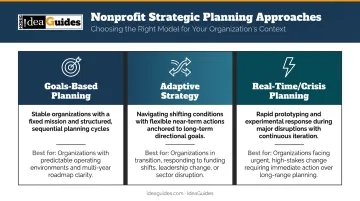
Common Strategic Planning Approaches
Nonprofits don't have to follow a rigid formula. The best approach depends on your organization's stability, environment, and culture. Common frameworks include:
- Goals-Based Planning: Starts with mission and vision, then establishes high-level goals and action steps. Best suited to stable organizations with clear mandates.
- Adaptive Strategy: Described by Bridgespan, this model sets long-term goals while keeping near-term actions flexible — useful when conditions shift quickly.
- Real-Time/Crisis Planning: Replaces a fixed plan with experiments and rapid prototyping. Reserved for major disruptions when a traditional roadmap isn't viable.
Why Strategic Planning Is Critical for Nonprofits
For resource-constrained nonprofits, operating reactively is a luxury you can't afford. A strategic plan provides the focus needed to allocate limited time, funding, and energy toward the activities that truly move your mission forward. Without this clarity, it's easy for teams to get pulled in too many directions, diluting their impact and leading to burnout.
While the process requires an investment of time, the returns are significant.
- Improved Resource Allocation: By forcing your team to choose a few top priorities, a strategic plan prevents you from spreading resources too thin across dozens of "good ideas." It provides a clear filter for making tough decisions about what to fund and what to put on hold.
- Stronger Stakeholder Confidence: A well-articulated plan shows donors, funders, and community partners that your organization is credible and purposeful — not just well-intentioned. BoardSource research links boards focused on strategic issues to higher perceived organizational performance.
- Better Risk Management: The planning process forces you to look ahead and anticipate potential threats—from funding shifts to changing community needs—before they become full-blown crises. This proactive stance is essential for long-term sustainability.
Many leaders worry that planning diverts resources from the mission itself. Done well, it does the opposite — it gives your team the clarity to stop doing the things that don't matter and double down on the work that does.
Key Components of a Nonprofit Strategic Plan
An effective strategic plan is more than a list of goals. It's a comprehensive document grounded in evidence and built for action. Here are the essential components every plan should include.
Mission and Vision Statements
These two statements are the north star for your organization.
- Mission Statement: Defines your organization's purpose, who you serve, and what you do right now.
- Vision Statement: Describes the ideal future your organization is working to create.
At the start of each planning cycle, confirm both statements still reflect your organization's reality and aspirations. If they don't, update them before setting a new course.
SWOT Analysis
Once your mission and vision are confirmed, a SWOT analysis grounds everything else in reality. It maps your organization's internal strengths and weaknesses against the external opportunities and threats that shape your environment.
| Internal Factors | External Factors |
|---|---|
| Strengths: What does your organization do well? What unique assets do you have (e.g., strong reputation, talented staff, loyal donors)? | Opportunities: What external trends or changes can you leverage (e.g., new funding streams, policy changes, growing community need)? |
| Weaknesses: Where does your organization struggle? What internal limitations do you face (e.g., outdated technology, lack of funding diversity, staff capacity)? | Threats: What external challenges could harm your organization (e.g., economic downturns, increased competition, shifts in public opinion)? |
The National Council of Nonprofits emphasizes that this analysis is critical for preparing an organization to adapt to a changing environment.
Strategic Priorities or Pillars
This is where your strategy takes shape. Instead of a long list of disconnected goals, the best plans identify three to five high-level priority areas (sometimes called pillars or focus areas). These represent the core of your change agenda for the next few years.
For example, a nonprofit's priorities might be:
- Deepen Programmatic Impact
- Achieve Financial Sustainability
- Invest in Organizational Capacity
Resist the temptation to add more. When every area feels urgent, nothing gets the focused attention it needs to move forward.
SMART Goals and OKRs
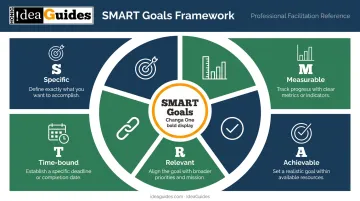
Each strategic priority must be broken down into actionable goals. The SMART framework, as defined by guidance from Candid, ensures every goal is well-defined:
- Specific: What exactly will you accomplish?
- Measurable: How will you know you've succeeded?
- Achievable: Is this goal realistic given your resources?
- Relevant: Does this goal directly support a strategic priority?
- Time-bound: When will this goal be completed?
Many organizations pair SMART goals with Objectives and Key Results (OKRs). This framework sets a clear objective and defines the specific, measurable outcomes that confirm it was achieved. The anti-trafficking organization Unbound Now, for example, uses OKRs in its strategic plan to track progress on key milestones.
Implementation System and Accountability
This is the component most often missing from nonprofit plans, and without it, even a well-crafted strategy sits unused. According to Bridgespan, a functional accountability system must include:
- Assigned Ownership: Every goal must have a specific person responsible for it.
- Defined Review Rhythm: A schedule for checking progress (e.g., quarterly leadership reviews, annual board check-ins).
- Tracking Mechanism: A dashboard or simple report that keeps progress visible to everyone.
How the Nonprofit Strategic Planning Process Works Step by Step
A successful strategic plan is as much about the process as it is about the final document. A typical planning cycle spans three to six months, and rushing it is a mistake. The stakeholder buy-in you build along the way is what makes successful implementation possible.
Step 1: Establish Your Planning Team and Scope
Assemble a planning committee of five to ten people who represent a cross-section of your organization. This should include the executive director, senior leaders, a few board members, and representatives from your frontline staff. Before you begin, define the scope: agree on the time horizon (typically three or five years), the budget for the process, and who has the final decision-making authority.
Step 2: Conduct Environmental Analysis and Stakeholder Research
Before you can set future priorities, you must understand your current reality. This means gathering evidence through financial reviews, program data analysis, and community needs assessments.
It also means going directly to your stakeholders — board members, staff, donors, partners, and the people you serve — through surveys and interviews. Building a plan on assumptions is the fastest way to create a document no one will trust or support.
Step 3: Facilitate a Strategic Planning Retreat
The planning retreat is where your team comes together to synthesize the research, conduct the SWOT analysis, and debate the big strategic questions. These intensive working sessions (often one or two days) are where you move from data to decisions and forge consensus on your strategic priorities.
The quality of this session often determines the quality of the entire plan. A professional facilitator — particularly one with nonprofit experience — can surface difficult trade-offs, make sure quieter voices are heard, and keep the group focused on producing clear, actionable outcomes rather than circling the same debates.
Step 4: Build Strategic Priorities, SMART Goals, and OKRs
Following the retreat, the planning committee translates the high-level agreements into a formal document. This involves drafting the 3-5 strategic priorities and developing specific SMART goals for each one. For every goal, you'll need to define the key results, assign an owner, set a timeline, and estimate the budget required.
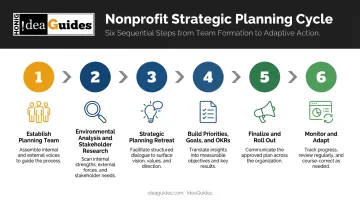
Step 5: Finalize, Communicate, and Roll Out the Plan
Once the draft is complete, it goes to the board for review, feedback, and final ratification. Filing the plan away internally after approval is one of the most common mistakes nonprofits make. Instead, communicate it broadly:
- Hold an all-staff meeting to walk through the new direction
- Show each team how their day-to-day work connects to specific priorities
- Share a summary version with key donors and volunteers
When people see where they fit in the plan, they're far more likely to invest in making it succeed.
Step 6: Monitor Progress and Adapt
Implementation is where plans succeed or stall. Put the accountability structure you designed in the planning stage to work immediately:
- Quarterly reviews with the leadership team to track progress against each priority
- Annual board check-ins to assess whether goals still match your mission and context
No plan survives contact with reality unchanged. If you face a leadership transition, a major funding shift, or a community crisis, revisit the plan — don't just push through it.
Common Mistakes Nonprofits Make in Strategic Planning
Even well-run nonprofits stumble during strategic planning. These four mistakes are the most likely to derail an otherwise solid process.
Creating a plan without clear metrics
Many nonprofit plans are built around aspirational goals like "increase community engagement" or "deepen community impact." Without defining what success looks like in measurable terms, these goals are impossible to manage. Every goal needs at least one concrete metric attached to it — a number, a deadline, or a defined outcome.
Treating stakeholder engagement as a checkbox
There's a huge difference between token consultation and genuine engagement. Asking stakeholders to review a nearly-finished draft isn't engagement; it's asking for a rubber stamp. Authentic involvement means bringing stakeholders into the process early to help shape the plan's direction based on their insights and needs.
Letting the board drive strategy instead of govern it
The board's role is to provide oversight, ask tough questions, and approve the final plan—not to write it. When boards overstep and start dictating strategic priorities, the staff who have to implement the plan often disengage. The process should be staff-led and board-governed.
Skipping the implementation infrastructure
Publishing a polished strategic plan document is the beginning of the process, not the end. Many plans fail simply because no one built the accountability structures needed to keep them alive. Before the plan is finalized, you need three things in place: named owners for each goal, a progress tracking method, and scheduled review dates. Without those, even a well-crafted plan stalls within the first quarter.
Frequently Asked Questions
Frequently Asked Questions
What should a nonprofit strategic plan include?
A strong plan includes mission and vision statements, a SWOT analysis, three to five strategic priorities, and SMART goals with measurable outcomes. It must also have assigned ownership for each goal, a timeline, and a system for regular progress reviews.
What is the 33% rule for nonprofits?
The IRS public support test requires nonprofits to show at least one-third (33.3%) of total support comes from public sources to maintain public charity status. Other tests and exceptions exist, including a 10% facts-and-circumstances test for organizations that fall short of the primary threshold.
What is the 80/20 rule for nonprofits?
Roughly 80% of donation revenue tends to come from about 20% of donors. This pattern underscores the importance of cultivating major donors — and building a broader funding base to reduce over-reliance on a small group.
How long does the nonprofit strategic planning process take?
Most organizations take three to six months to move from kickoff to a board-approved plan. The exact timeline varies based on an organization's size and complexity.
How often should a nonprofit update its strategic plan?
Most strategic plans have a three-to-five-year horizon. Organizations should conduct quarterly or annual reviews to track progress and make adjustments as needed. A full refresh is typically triggered by a completed plan cycle, a leadership transition, or a significant shift in funding or mission.
Who should be involved in nonprofit strategic planning?
The process should be inclusive, involving the executive director, senior staff, a board planning committee, and frontline staff representatives. It's also critical to gather input from external stakeholders, including donors, community partners, and the people your organization serves.