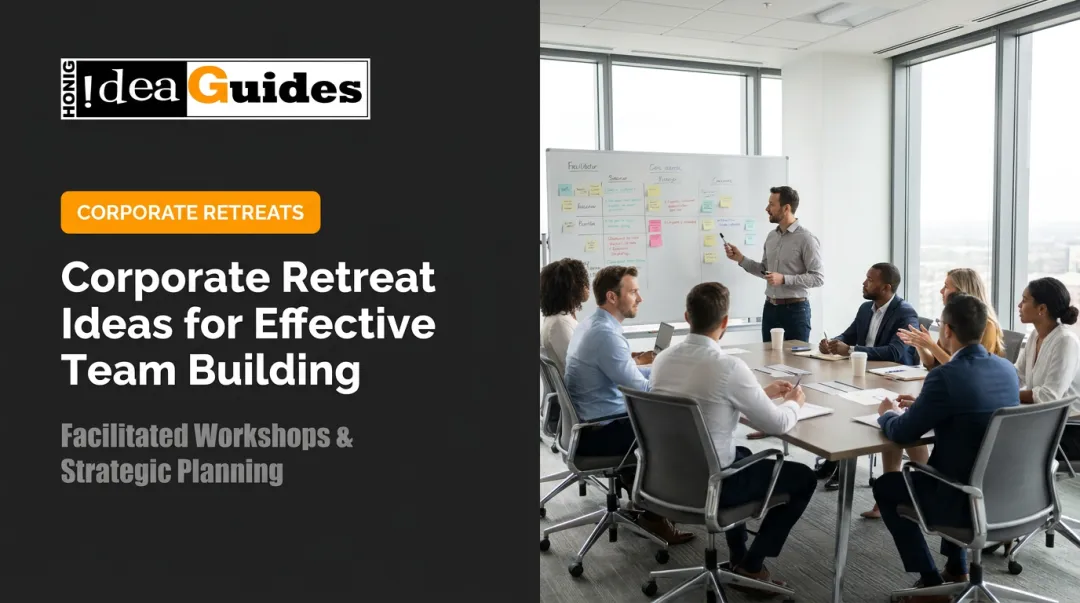
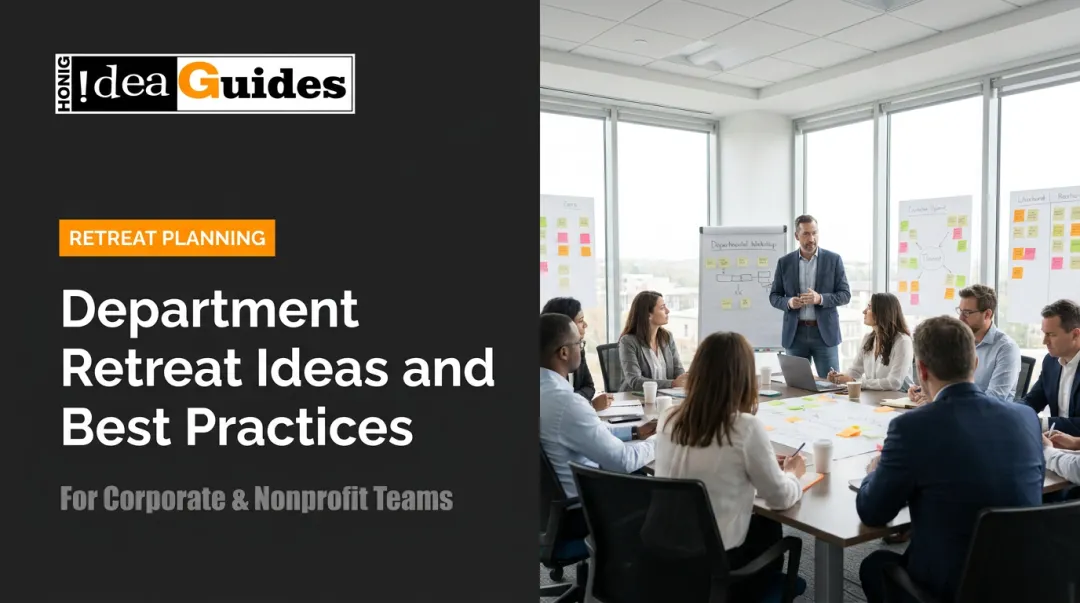
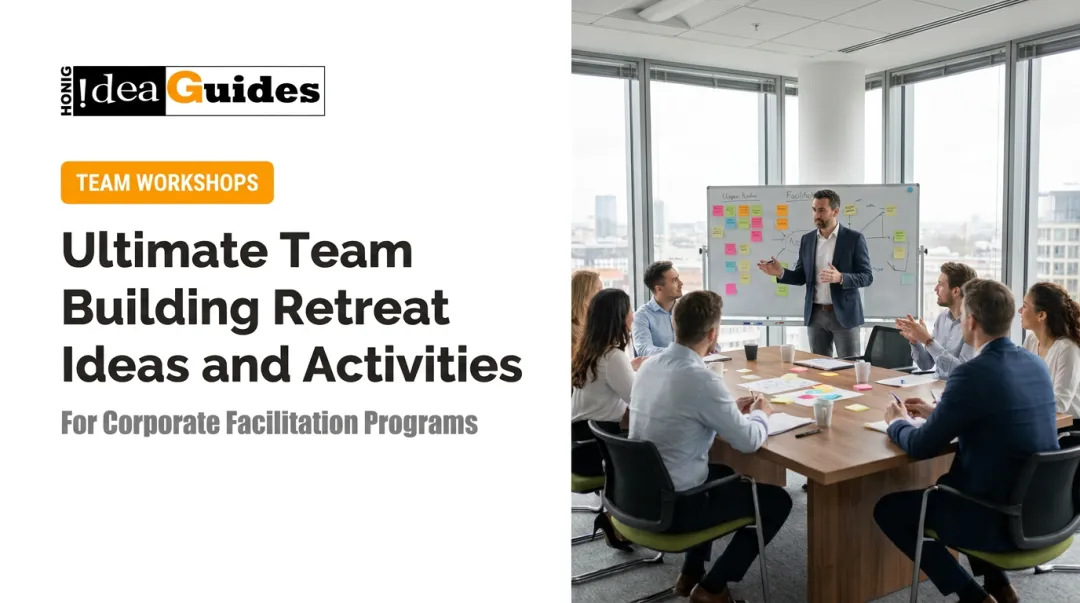
A strong theme changes everything. It shapes the agenda, focuses the conversations, and gives leaders a shared narrative to rally around instead of a loose collection of meetings. Without one, offsites become "just another day out of office."
This article covers 15 retreat themes grouped into three categories: strategic alignment, trust and culture, and innovation and change. We'll also cover how to pick the right one and run it well.
Key Takeaways
- A clear theme gives your retreat structure, focus, and a shared narrative that drives alignment
- The right theme depends on your team's current state: transition, conflict, growth, or stagnation
- Professional facilitation turns open discussion into decisions leaders can act on
- Choose from three theme buckets: strategic alignment, trust & culture, and innovation & change
Why Retreat Themes Matter for Leadership Alignment
Leadership teams rarely lack good intentions. They lack shared focus. Competing departmental priorities, conflicting KPIs, and unresolved tension pull executives in different directions well before they walk into the retreat room.
A theme forces the group onto one narrative for the duration of the offsite. Instead of a strategy tangent turning into a budget argument turning into a vague "culture" conversation, everyone works one problem from multiple angles.
That same focus improves what sticks after the offsite. Research on leadership development transfer found that less than 30% of what's learned in group settings gets applied on the job afterward, and one review found figures as low as 5% in some studies (ATD, 2019).
A themed retreat with a clear, singular focus and built-in follow-through gives leadership teams a much better shot at beating that number.

Without a theme, retreats tend to produce:
- Scattered agendas that jump between unrelated topics
- Unresolved conflict that resurfaces at the next quarterly meeting
- A day that feels pleasant but changes nothing back at the office
5 Retreat Themes for Strategic Alignment & Vision
These themes work best when a leadership team is entering a new phase: scaling, fundraising, restructuring, or annual planning.
Theme 1: "Charting the Course" (Long-Term Vision Alignment)
This theme gets leaders to agree on a 3-5 year direction beyond daily execution. It's a strong fit for annual strategic planning retreats or aligning teams after an acquisition, when two leadership cultures suddenly need one roadmap.
Theme 2: "One Team, One Scorecard" (Priority Alignment)
Departments often optimize for their own metrics at the expense of the whole company. This theme unifies leaders around a shared set of KPIs. It works especially well when sales, product, and operations are quietly pulling in different directions.
Theme 3: "The Decision Room" (Clarity & Accountability)
Some organizations get stuck circling the same strategic decision for months. This theme is built to force resolution on stalled choices (pricing, market entry, restructuring calls) and suits teams stuck in analysis paralysis.
Theme 4: "Future-Proofing the Business" (Risk & Resilience Planning)
Centered on scenario planning, this theme prepares leadership for market shifts before they happen: supply disruptions, new competitors, regulatory changes. The goal is building shared instincts before a crisis hits, not running a post-incident debrief.
Theme 5: "Aligning the Org Chart" (Structural & Role Clarity)
Growth and reorganizations often blur reporting lines and role ownership. This theme brings those tensions into the open. It's a natural fit for facilitator-led sessions: a neutral, structured approach helps surface role conflicts without anyone feeling personally targeted.

IdeaGuides frames these conversations around shared organizational goals rather than individual positioning, so the discussion stays productive.
5 Retreat Themes for Trust, Communication & Culture
Even sound strategy falls apart when relational friction gets in the way. These five themes address the human side of alignment.
Theme 6: "Behind the Title" (Vulnerability & Trust Building)
Structured exercises help executives see each other as people first, not just job titles. This matters more than it sounds: only 43% of employees report a positive team climate, according to a McKinsey survey of over 1,200 team members (McKinsey, 2021). Leadership teams aren't immune to that same gap.
Theme 7: "Conflict to Clarity" (Healthy Conflict Norms)
This theme establishes ground rules for disagreement so debate strengthens the team instead of damaging it. Leaders learn to challenge ideas without attacking people, a distinction most teams never explicitly discuss. Sessions typically produce a shared conflict protocol the group can reuse in real meetings.
Theme 8: "The Feedback Loop" (Communication Reset)
This theme resets how leaders give and receive feedback across the team. Gallup found that employees who could give honest feedback about organizational changes were 7.4 times more likely to trust leadership's ability to manage future challenges (Gallup, 2023).
Theme 9: "Culture by Design" (Values Alignment)
Most leadership teams assume shared values without ever defining them explicitly. This theme requires the group to articulate what the company actually stands for and how leaders will model it day to day, not just print it on a wall. The output is a short values-to-behaviors map the team can hold itself to.
Theme 10: "Reconnect & Recommit" (Post-Conflict or Post-Change Repair)
Used after layoffs, leadership turnover, or a rough year. The first job is rebuilding trust, because strategic alignment does not stick on a broken foundation.

5 Retreat Themes for Innovation, Growth & Change Leadership
These themes suit teams facing disruption, stalled innovation, or an upcoming transformation.
Theme 11: "Bold Moves" (Innovation Sprint for Leaders)
Structured brainstorming and fast-cycle idea generation aimed at producing genuine strategic bets, not another list of incremental improvements. IdeaGuides runs high-speed ideation formats, such as Solution Speedway sessions, that generate dozens of concepts in hours. Teams then narrow those concepts to a short list worth pursuing.
Theme 12: "Leading Through Change" (Change Management Alignment)
Prepares leadership to communicate a coming transformation with one voice. The research is clear: a transformation was 5.8 times more likely to succeed when the CEO told a compelling change story, and 6.3 times more likely when senior leaders delivered aligned messages (McKinsey, 2017).

Theme 13: "Outside the Boardroom" (Perspective Shift Retreat)
Unconventional locations or formats break routine thinking patterns. Sometimes the fastest way to get new ideas out of senior leaders is to physically remove them from the room where they've had the same conversation a hundred times.
Theme 14: "Growth Without Chaos" (Scaling Alignment)
Focuses on the systems, processes, and hiring plans leadership needs to agree on before scaling further. Growth without this alignment tends to create the very structural confusion Theme 5 was built to fix.
Theme 15: "The Next Chapter" (Succession & Legacy Planning)
Addresses leadership transitions, mentoring the next tier, and legacy conversations that founders and long-tenured executives often avoid. These discussions get political fast without neutral guidance. IdeaGuides brings 25+ years of facilitation experience to these conversations, keeping the discussion focused on the organization's future rather than individual agendas.
How to Choose and Run the Right Themed Retreat
Theme selection should match where your leadership team actually stands right now:
- In transition — reorganization, acquisition, new leadership → strategic alignment themes
- In tension — unresolved conflict, low trust, recent turnover → trust & culture themes
- In stagnation — complacent, risk-averse, missing growth targets → innovation & change themes
- In momentum — scaling fast, need to lock in systems before things break → growth-focused themes
Before locking in a theme, weigh:
- Current organizational challenges — what's actually stalling progress?
- Retreat goals — decisions to make versus relationships to repair
- Team size and dynamics — a 6-person exec team needs a different format than a 40-person leadership group
- Desired post-retreat outcomes — documents, decisions, or commitments you need in hand by Monday

A theme without skilled facilitation is just a nice day out. A trained facilitator keeps conversations on track, makes sure quieter voices get heard, and turns discussion into a documented action plan instead of a warm memory.
IdeaGuides typically builds retreats through client interviews and surveys first, then designs the agenda (from visioning and decision-making to conflict resolution) around what the team specifically needs, usually across 1 to 4 days.
Frequently Asked Questions
What are some good themes for a leadership retreat?
Top themes fall into three categories: strategic alignment, trust-building, and innovation. The right choice depends on whether your team needs to set direction, repair relationships, or spark new thinking.
What are some good themes for a work or team retreat?
Broader team retreats often lean into culture-building, skills development, and celebration. Leadership-focused sessions center on decisions and accountability instead.
What are some good retreat themes?
Pick the outcome first—reset, shared vision, or stronger connection—then choose a theme that forces that conversation. A theme without a defined outcome usually means a pleasant day with little follow-through.
What are some popular retreat themes right now?
Current trends include wellness and reset retreats, AI and innovation-focused sessions, and culture retreats for hybrid teams.
How long should a leadership alignment retreat be?
Most effective leadership retreats run 1 to 4 days, depending on the depth of topics and the number of decisions that need resolving.
Do we need a professional facilitator for a themed leadership retreat?
A neutral facilitator surfaces honest input, manages conflict without personal bias, and keeps the group moving toward documented decisions rather than just conversation.