Yet many boards leave these sessions frustrated. The day feels unfocused. Slides pile up. Everyone nods along, then walks out without real alignment on what happens next. BoardSource has flagged this exact problem, recommending that routine reporting move to a consent agenda so meeting time can actually be spent on strategic and generative discussion instead of passive updates.
This guide covers how to build the right agenda, prepare thoroughly, and facilitate a session that produces real decisions — not just a nice day out of the office.
Key Takeaways
- Start planning early—waiting until the week before leaves no room for real prep
- Build agendas around discussion and co-creation, not presentations
- Neutral facilitation often separates a productive day from a wasted one
- Lock in follow-up structures so strategy decisions actually get executed
- Run strategy as a dedicated offsite, not a squeezed-in regular meeting
What Is a Board Strategy Session (and Why It Matters)
A board strategy session, sometimes called a board retreat or "advance," is a dedicated forum where the board and leadership team set aside routine governance to focus on long-term direction. These sessions often run a full day or span a multi-day offsite.
BoardSource considers an annual retreat appropriate specifically for large, complex issues that a regular board meeting can't adequately address, including the organization's long-term future.
How It Differs From a Regular Board Meeting
Regular board meetings are procedural by design. They cover financial oversight, committee reports, and formal votes. A strategy session flips that balance:
| Dimension | Regular Board Meeting | Strategy Session |
|---|---|---|
| Agenda | Structured governance items, consent agenda | Exploratory questions and scenarios |
| Discussion | Limited open-ended time | Prioritization exercises |
| Output | Committee reports and formal votes | Shared priorities, minimal formal reporting |
85% of board members and executives rank strategic planning as a top governance priority, according to Protiviti's 2024 Global Board Governance Survey of over 1,000 respondents. That ranking is why high-performing boards protect dedicated time for strategy outside the regular meeting cycle.

The core value of a strategy session is alignment: getting the board and executive team on the same page about priorities, opportunities, and risks before they show up in a crisis. A board retreat typically combines that strategic work with relationship-building time among directors and executives: informal conversations that rarely happen during a two-hour quarterly meeting.
How to Build the Board Strategy Session Agenda
Setting Objectives and Scope
Before drafting a single agenda item, agree on scope. Are you reviewing a five-year plan, or doing a mid-cycle check-in on last year's priorities? These require very different agendas.
Then define 2-3 non-negotiable outcomes the day must produce. Examples:
- A ranked list of top three strategic priorities for the next 18 months
- Agreement on one major resource allocation decision
- A shared understanding of the competitive landscape
Without these anchors, discussion drifts and the day ends with "good conversation" but no decisions.
Structuring the Day
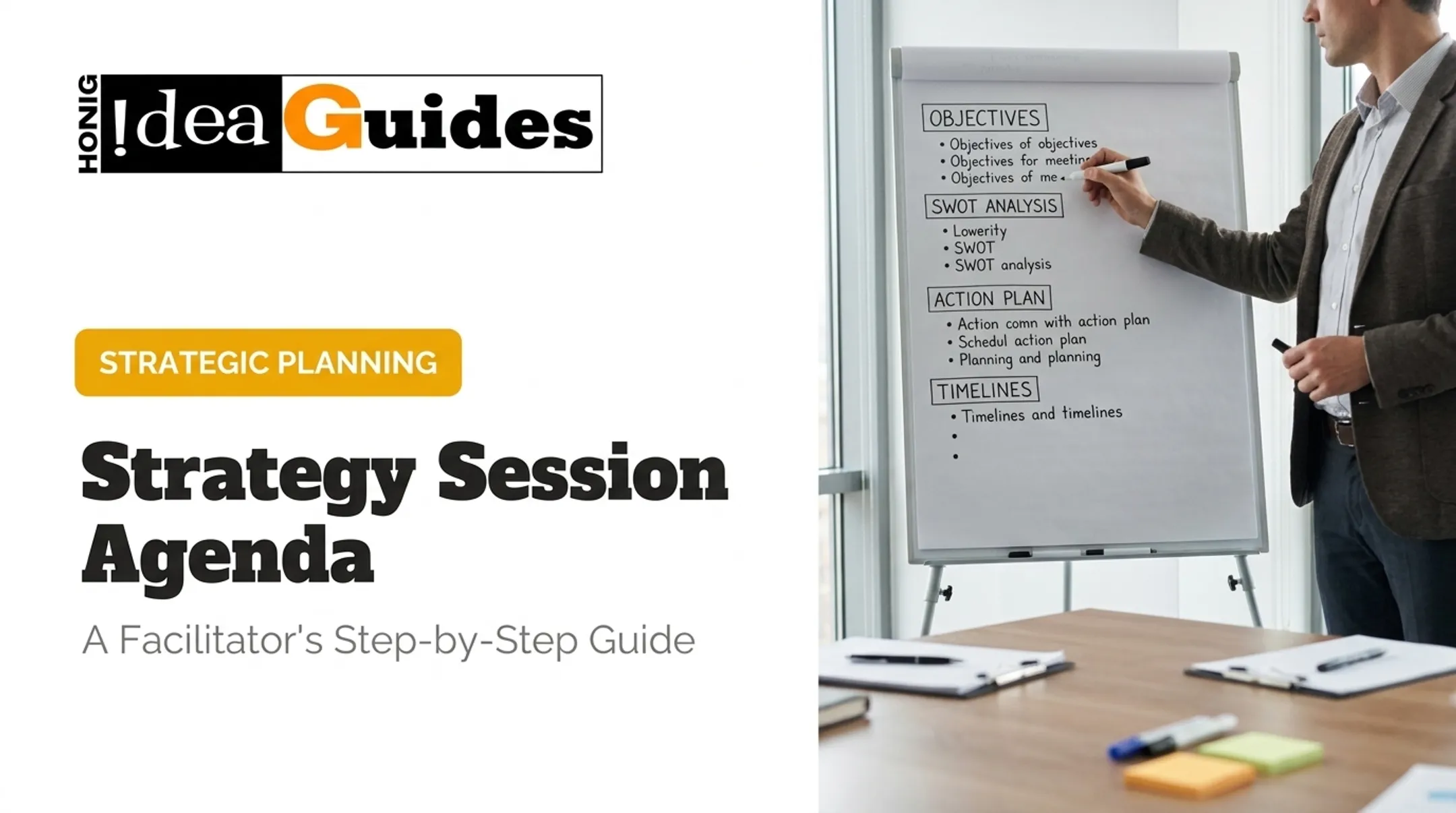
Once outcomes are set, build the day around discussion—not slide decks. Limit formal presentations to a handful — three or four at most. Spencer Stuart's boardroom guidance warns that executive presentations often repeat material already in board packets, eating into discussion time. Circulate slides in advance and present only the executive summary live.
A sample flow that works well:
- Context-setting — brief framing, not a full business review
- Environmental scan discussion — SWOT-style conversation, not a static slide
- Prioritization exercise — narrowing options to what actually matters
- Decision/alignment session — where the board commits to direction
- Action planning — assigning owners and timelines before anyone leaves the room
Build in real breaks. Sustained strategic thinking is mentally demanding—a board sitting four hours straight will not generate its best ideas.

How to Conduct a Strategy Session: Pre-Work and Preparation
Planning shouldn't start the week before. Build in lead time. Involve the chair, CEO, and a small planning group early enough to define the real decisions at stake, gather input, and prepare materials properly.
Pre-work checklist:
- Send directors a short questionnaire: biggest opportunities, biggest threats, top three priorities
- Distribute pre-reading materials well ahead of the session, not the morning of
- Run an internal review of the board's own strategic strengths and weaknesses
- Finalize the agenda only after synthesizing what comes back from directors
This isn't busywork. BoardSource's own strategic planning case study describes a multi-stage process that included stakeholder interviews, a staff retreat, and a board survey — all completed before the retreat itself, so session time wasn't consumed by information-sharing.
Logistics That Actually Matter
Choose a venue away from the office, somewhere that signals this isn't a regular meeting. The room should support breakout conversations:
- Movable chairs and flexible seating
- Whiteboards or wall space for capture
- Room for small groups to work apart, then reconvene
A boardroom table bolted to the floor works against you here.
Facilitation Tips for a Productive Board Strategy Session
Here's the tension every chair and CEO faces: you're expected to both participate in the strategic conversation and manage the room. Doing both well, simultaneously, is hard.
That's why many boards bring in a neutral, external facilitator. A skilled facilitator can:
- Manage group dynamics so quieter directors get heard, not just the loudest voices
- Prevent the chair or CEO from unintentionally dominating discussion
- Keep the day on schedule without feeling rigid
- Synthesize ideas in real time instead of letting debate go in circles
This is where firms like IdeaGuides fit in. Based in the San Francisco Bay Area and facilitating groups since 1999, IdeaGuides structures strategic planning around a clear arc: past performance, mission and values, the present state, a future vision, then concrete goals and tactics.
Sessions run one to three days, on-site, off-site, or remote. They use structured techniques such as small-group breakouts, prioritization exercises, and nominal group technique instead of open-ended debate that goes nowhere.

One example: a 2024 one-day strategic planning session with the Ketchikan Community Concert Band's board. According to the client, the board "came away from the session with good direction and attainable goals," and facilitator Bruce Honig was "very effective at keeping the participants engaged and on task."
Whether you hire outside help or facilitate in-house, these moves keep the room productive:
- Brief the facilitator on desired outcomes early so they help shape the agenda, not only run the day
- Set ground rules for airtime, decision rights, and parking-lot items before debate starts
- Time-box each agenda block and name a timekeeper so discussion does not swallow the afternoon
- Capture decisions, owners, and deadlines in real time on a shared board everyone can see
- Close with next steps and a 30-day check-in so momentum survives the retreat
A facilitator involved in planning avoids surprises when the conversation gets tense or veers off track.
Turning Strategy Into Action: Follow-Up and the 5 C's
A brilliant strategy session with no follow-through is just an expensive offsite. The value gets lost the moment everyone returns to their inbox unless someone captures decisions, assigns owners, and tracks progress.
Use the 5 C's as a post-session checklist:
- Clarity: Is the decision written down in plain language, not vague aspiration?
- Communication: Has it been shared with the people who need to act on it?
- Consistency: Does it show up on future agendas, not just this one?
- Commitment: Do specific people own specific actions?
- Culture: Does the organization reinforce follow-through, or does strategy quietly die after the retreat?

Two practical habits make the difference:
- Run a short post-mortem right after the session on what worked and what to change next time
- Schedule regular check-ins where the board reviews progress against the priorities it just set
Some facilitation firms build this into the engagement itself. IdeaGuides, for instance, offers an optional follow-through process after goals and tactics are set, so owners stay accountable after the retreat ends.
Frequently Asked Questions
How do you conduct a strategy session?
Set clear objectives and prepare directors in advance with pre-reading and a short questionnaire. Build a discussion-heavy agenda, then bring in a skilled facilitator to keep the day on track and produce real decisions.
What is the recommended structure for a board meeting?
Regular board meetings follow a structured agenda covering governance items, reports, and formal decisions. A strategy session shifts most of that time toward open discussion and long-term thinking instead.
What is a board retreat?
A board retreat is an offsite gathering, often lasting one or more days, that combines strategic planning with relationship-building among directors and executives, away from routine business.
What are the 5 P's of strategic planning?
Purpose, Picture (vision), Plan, Priorities, and People: five elements that help structure agenda topics for a strategy session.
What are the 5 C's of strategy implementation?
Clarity, Communication, Consistency, Commitment, and Culture: five factors that determine whether a strategy actually gets executed after the retreat ends.
How far in advance should a board start planning its strategy session?
Plan 6–8 weeks ahead so you can define the decisions at stake, gather director input through pre-work, and coordinate with a facilitator. Rushing this stage is one of the most common causes of an unfocused session.